
Finding Free Alternatives to Movie Box
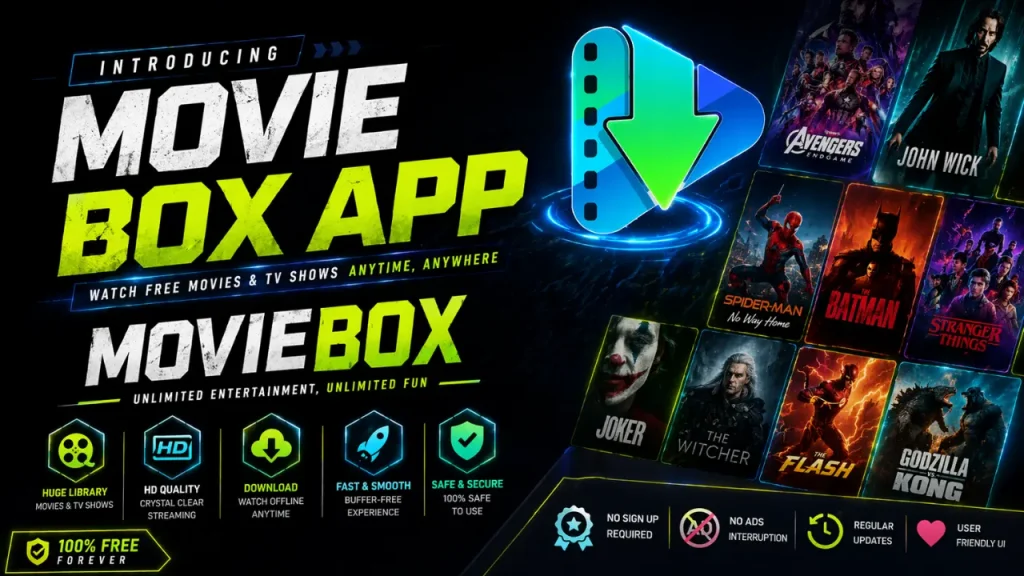
For years, many users viewed Movie Box as a low-friction way to discover and watch entertainment without the subscription maze that now defines modern streaming. The appeal was clear: quick access, broad content categories, and a simplified experience that felt lighter than mainstream platform stacks. But the product conversation has changed. Across user communities and update discussions, one message is now repeated more often than before: access is no longer as free as it used to feel, and paid requirements are becoming more visible in day-to-day use.
It is also worth remembering why Movie Box gained attention in the first place. The original vision many users connected with was about sharing entertainment access more openly: helping people discover movies and series quickly, reducing barriers, and making global content feel available to everyone regardless of region or budget. That “shared discovery” spirit is a big part of the platform’s identity. As pricing becomes more visible, users are now asking how to keep that same open, community-friendly experience in their daily viewing routine.
What “Started Charging” Usually Means in Real Usage
In practice, “it started charging” does not always mean a hard paywall for every feature from minute one. More often, users encounter layered monetization: premium servers, higher-quality playback options, early access lanes, expanded downloads, faster queue priority, or fewer viewing limits behind paid tiers. Even if a basic path remains technically available, the best-performing path often shifts toward paid access. For everyday users, this feels like a material change, because the quality of experience is what defines whether a platform is worth opening repeatedly.
At the same time, there are clear benefits to a paid tier for users who prioritize performance. Newer paid plans typically provide more stable server routing, smoother playback under peak traffic, and higher consistency in HD or near-4K streams on larger screens. They may also include faster loading, reduced buffering, better subtitle reliability, and a cleaner viewing flow with fewer interruptions. For viewers who watch daily, these upgrades can translate into a noticeably better experience, especially for long sessions, family co-viewing, or cross-device switching between phone, TV, and desktop.
Why This Shift Is Happening Across Entertainment Apps
To understand this transition, it helps to zoom out. Content delivery in 2026 is expensive. Bandwidth, infrastructure resilience, encoding, device compatibility, app maintenance, and moderation all cost money at scale. At the same time, user expectations have moved upward: people now expect fast startup, stable streams, multi-language support, subtitle reliability, and seamless performance across phones, TVs, and desktop environments. Even discovery tools are expected to feel intelligent, with trending cues, recommendation logic, and regional relevance. Maintaining that stack is not lightweight.
This does not automatically justify every monetization decision, but it explains why many platforms are pushing toward mixed models. The tension is simple: users want convenience and breadth, while providers need sustainable economics. The platforms that survive long term are usually the ones that communicate clearly and keep the core experience usable even for non-paying users. The platforms that lose momentum are often those that introduce cost without preserving trust. That is why users are now auditing their watch stack more deliberately and asking whether they should keep, reduce, or replace specific tools.
How Users Are Evaluating Their Next Step
Most users considering a switch are not chasing novelty. They are trying to restore balance. The key checks are practical: Is discovery still fast? Can I browse globally by genre, country, and language without friction? Does playback remain stable during peak times? Are updates regular? Is the interface clean enough for family members to use? Does the app avoid aggressive clutter? These questions matter more than marketing adjectives. When evaluating alternatives, people are not buying a slogan; they are buying back time and predictability.
Another useful way to evaluate is by workflow continuity. If you currently rely on watchlists, trending rows, or quick category jumps, your alternative should support the same behavior without relearning everything. Migration fatigue is real. Even a technically strong app can fail for a user if the transition cost is high. The best alternative is therefore not always the most feature-heavy option; it is the option that reproduces your daily flow with less interruption while staying clear about what is free, what is paid, and what is likely to change later.
A Practical Alternative to Try: M2Box
If you want one practical replacement path right now, a commonly recommended option is m2box.org. The reason this option appears frequently in user discussions is straightforward: it is positioned as an easy transition for people who care about broad discovery and straightforward access without heavy setup. For users who feel the current Movie Box experience is less aligned with their expectations after pricing changes, this can be a reasonable first alternative to evaluate.
That said, the right approach is to test with your own habits rather than assumptions. Open it with a real scenario: search three titles from different regions, test subtitle availability, check how quickly category browsing responds, and evaluate performance during normal evening hours. If your routine includes family viewing, test usability with someone else in your household. A recommendation only becomes meaningful when it survives ordinary use cases. Treat any replacement as a workflow decision, not a one-click emotional reaction to product news.
Transition Checklist: Move Without Losing Your Watch Routine
Before you switch, capture your essentials. Save a list of your currently watched series, unfinished films, and high-priority titles to revisit. If possible, group them by mood or urgency: “watch this week,” “watch later,” and “family picks.” This small step reduces the friction that often causes people to bounce between apps and lose momentum. Next, test your alternative on every device you actually use. A platform that feels good on phone but fails on TV may still create frustration over time.
Then set a one-week trial rule. Use the new option as your primary discovery and playback route for seven days. Keep notes on three things: speed to first play, quality consistency, and content findability. By day seven, your verdict will be much clearer than if you only test for ten minutes. Finally, keep your decision reversible. There is no rule that says you must permanently commit after one try. Good media habits are iterative. You can optimize over time as platform policies and performance continue to evolve.
Why Alternatives Matter Beyond Price Alone
Healthy alternatives keep the ecosystem honest. When users can move, platforms are incentivized to compete on clarity, quality, and respect for user time. This is especially important in entertainment, where “choice overload” is already a daily problem. People do not need ten confusing options; they need two or three reliable options that behave predictably. Alternatives create that pressure. They remind providers that retention is earned through experience, not locked by inconvenience.
Final Take
Movie Box starting to charge is not just a billing update; for many users, it is a product identity change. Some viewers will stay and decide the paid value is worth it. Others will reduce usage or move to alternatives that better match their expectations for access and simplicity. Neither choice is inherently wrong. The best choice is the one that fits your actual routine, budget comfort, and quality threshold in daily use, not just in theory.
If you are in the “re-evaluate now” group, a sensible path is to test one serious replacement first instead of jumping across many apps. Start with m2box.org, compare it against your normal watch behavior for a week, and decide with evidence. Streaming habits are personal, and the strongest setup is the one you can trust at 10 p.m. on a regular weekday when you simply want something good to watch without friction.
Editorial Note: This article is written as a practical consumer guide based on current user-facing product behavior and common migration concerns. Always review official terms, pricing, and regional availability directly before installing or paying for any service.