
Movies
Explore synopsis, cast and crew credits, production background, filming details, and context for each title's creative impact.
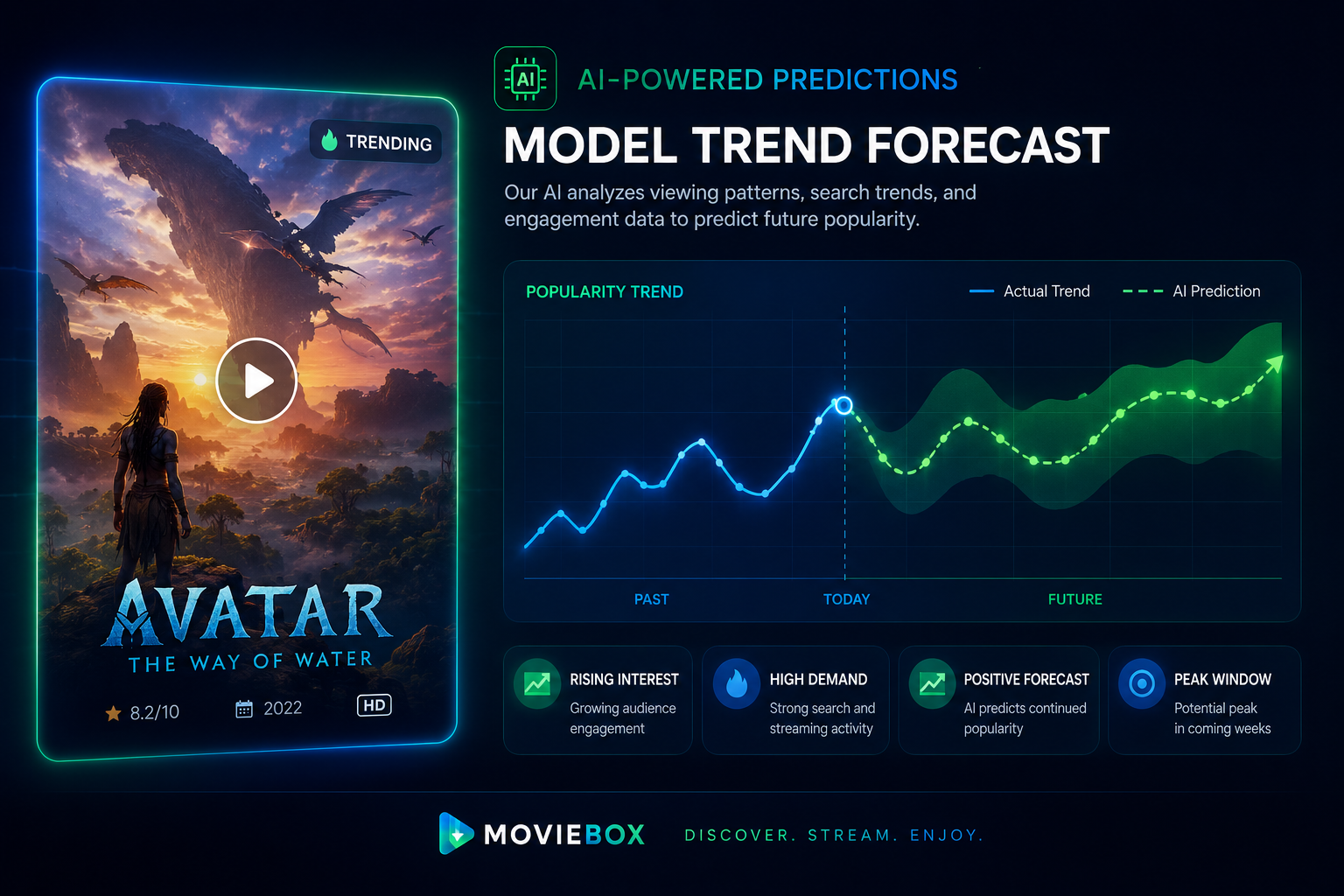
MovieBox Wiki uses AI-powered predictions to help you quickly see which movies are the hottest right now and which titles are rising fast. We combine real-time engagement signals and historical performance patterns, then refresh results with confidence guidance and update timing so you can choose what to watch based on clear, practical popularity direction.
Global Buzz: Trending signals blend streaming activity, social mentions, search behavior, and on-site engagement for a broad real-time picture.
Regional Spotlight: See what is hot by region and discover titles crossing borders from K-drama to British thrillers, anime, and European arthouse works.
Seasonal Rhythms: Understand release patterns across the year, including blockbuster summers, awards season peaks, holiday family titles, and genre windows.
Action,Thriller
Comedy
Drama,Romance
Comedy,Drama
Action,Adventure,Comedy
Drama,Romance
Explore synopsis, cast and crew credits, production background, filming details, and context for each title's creative impact.
Follow season arcs, episode breakdowns, guest highlights, and current status so you can binge smarter and catch up faster.
From anime to donghua to Western animation, discover studio data, source material notes, and format-specific creative details.
Dive into actor, director, writer, and composer profiles with timelines, filmographies, award history, and key collaborations.
The history of box office cinema reflects the growth of both storytelling and technology. Early silent films built the language of visual narrative, while the studio era turned movies into a global cultural force. Color, widescreen, and sound design transformed audience expectations, and blockbuster franchises later expanded scale and worldwide reach. In recent decades, digital production, CGI, and global distribution networks have accelerated how quickly films travel across regions. At the same time, diverse voices from Asia, Africa, Europe, and Latin America have reshaped mainstream taste. Today, all-time box office leaders represent more than revenue; they show how cinema evolves with society, innovation, and shared human emotion across generations. They also prove the lasting value of cinema as a collective cultural experience.
Movies shape global culture by building empathy across borders, introducing audiences to new languages and traditions, and creating shared stories that connect people from different backgrounds. Great cinema also supports education, inspires creativity, drives tourism and local economies, and encourages meaningful conversations about identity, history, and social progress.
Audiences now jump across Korean drama, Japanese anime, Nigerian thrillers, and European cinema in one seamless watch journey.
Anime and donghua continue global expansion, while major platforms invest heavily in new franchises and international audiences.
With titles split across multiple platforms, MovieBox Wiki offers one context-rich layer to compare, understand, and choose better.
Limited series, anthologies, and interactive storytelling continue to expand how creators tell stories across film and television.
High-quality film reviews help audiences make better viewing choices and deepen cultural understanding. Strong critics do more than score movies—they explain craft, context, and meaning in ways that invite richer conversations. Roger Ebert showed how criticism can be clear, human, and welcoming to broad audiences, while Pauline Kael demonstrated how bold critical writing can shape film culture itself. Good reviews spotlight overlooked works, preserve artistic history, and encourage viewers to engage with cinema more thoughtfully across generations.
Love how easy it is to spot trending titles. The page feels clean and the recommendations are actually useful.
Great mix of quick insights and visual browsing. I found two new favorites in under ten minutes.
The category layout and FAQ are super clear. Perfect for discovering what to watch with friends.
Fast, informative, and fun to explore. The trending section and encyclopedia cards work really well together.
Tap each question to expand or collapse the answer.
Genre describes a movie’s format and tone—such as action, comedy, thriller, or romance—while theme is the deeper idea the story explores, like justice, identity, grief, or redemption. One film can belong to one or more genres and still carry multiple themes.
Box office refers to ticket revenue earned by a movie in cinemas. It is often used to measure commercial performance, audience reach, and market momentum. While high box office does not always equal critical quality, it helps show how widely a film connects with viewers.
Ratings are summaries, not final truth. A strong way to use them is to compare critic scores, audience scores, and written reviews together. This gives a fuller picture of craft quality, entertainment value, and whether the film matches your personal taste.
Cinematography shapes how a story feels through camera movement, framing, lighting, color, and lens choice. It can create intimacy, tension, scale, or isolation, often communicating emotion before characters even speak.
Pacing is influenced by cultural storytelling traditions, editing styles, audience expectations, and production models. Some markets prefer slow emotional build-up, while others emphasize rapid plot progression or genre intensity.
Editors decide the rhythm and clarity of a film by selecting takes, arranging scene order, and controlling transitions. Good editing improves emotional impact, narrative coherence, and tension, turning raw footage into a meaningful story flow.
A practical method is to combine filters: start with genre, then choose country, year, and language, and finally scan director or cast history. This approach often reveals high-quality titles that are critically respected but less visible in short-term trends.