
Upcoming Movies Outlook: What Audiences Are Waiting For Next
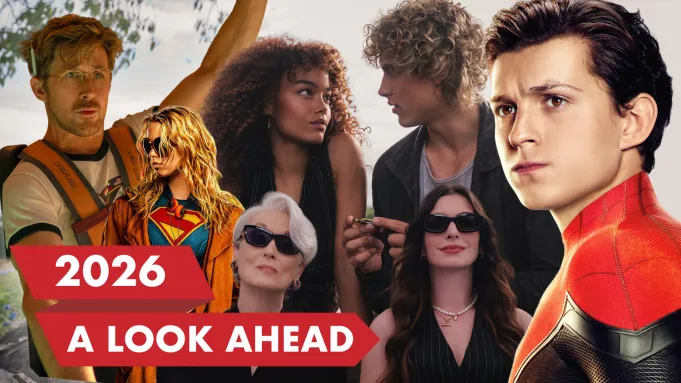
The conversation around upcoming movies has shifted in a meaningful way. In previous years, pre-release buzz was mostly driven by trailers and studio campaigns. In 2026, audience anticipation feels more informed, more selective, and more emotionally specific. People are still excited by large franchises, but they are no longer impressed by scale alone. They are looking for films that offer a reason to care: stronger character stakes, clearer directorial vision, and storytelling that feels intentional rather than algorithmically assembled.
Across public discussion spaces, many viewers describe a similar pattern. Someone says they are willing to buy tickets for big event cinema, but only if the film has a distinct identity. Another person says they are excited for familiar IP, yet still want risk and freshness in tone. Others mention that marketing can create opening-weekend curiosity, but long-term success now depends on whether the movie has emotional durability beyond the first wave of reactions. These comments point to a new reality: anticipation is no longer just hype; it is expectation management.
Which Upcoming Films Are Generating the Strongest Pre-Release Attention?
Several titles are consistently mentioned when audiences discuss the next phase of major releases. Large-scale literary adaptations, high-concept science fiction projects, and franchise continuations are all competing for attention. The most anticipated slate tends to combine three traits: a recognizable creative team, a clear cinematic promise, and a concept that can be explained in one sentence but explored in many layers. When those factors align, people begin discussing the film months in advance without needing constant marketing reminders.
What is especially interesting is how anticipation now works in waves rather than one continuous line. The first wave is announcement-driven. The second wave is trailer-driven. The third wave, often the most decisive one, is conversation-driven—where people debate tone, adaptation choices, casting direction, and whether the project will actually deliver on its premise. If that third wave stays positive or at least curious, momentum tends to hold. If it turns cynical, excitement can fade quickly even before release week arrives.
What People Are Actually Saying Before Release
When we reviewed recent audience discussions, four recurring viewpoints appeared again and again. First, many people want blockbuster clarity: they appreciate ambitious world-building, but still expect coherent storytelling and understandable stakes. Second, viewers increasingly care about runtime efficiency; they are open to longer films if every scene has purpose, yet they are quick to criticize bloated pacing. Third, there is strong demand for memorable characters over empty set pieces. Spectacle still matters, but it is no longer enough on its own.
The fourth viewpoint is perhaps the most important: audiences now evaluate pre-release credibility. If a project’s marketing tone, cast interviews, and early footage all suggest a consistent direction, trust rises. If the messaging feels contradictory, uncertainty spreads. In practical terms, someone may say they are “interested but cautious,” another may say they are “waiting for first reviews,” and another may say they “want to believe, but have been burned before.” These are not negative comments. They are signs of a more mature audience that wants evidence before committing full enthusiasm.
Why This Matters for 2026 and Beyond
This change in audience behavior could improve the quality of future releases. When viewers reward coherence, emotional payoff, and creative risk, studios have a stronger incentive to prioritize script discipline and long-term brand trust. Franchises become healthier when each installment is treated as a real film, not only a marketing checkpoint. Mid-budget and concept-driven projects also benefit, because audiences are increasingly willing to support originality when it is communicated clearly.
At the same time, there is pressure on creators to be transparent. Overpromising is riskier now because online discussion quickly exposes mismatches between promotion and final product. The upside is that honest positioning can build stronger loyalty. A film that delivers exactly the tone it promised—even if it is niche—often earns more lasting respect than a film that tries to be everything for everyone. This is one of the most valuable lessons emerging from current pre-release conversations.
How to Watch the Upcoming Slate Smarter
If you want to track upcoming movies efficiently, a simple strategy works well. Start with your personal priority map: genre, director, and emotional mood. Then separate your list into three buckets: opening-week must-watch, wait-for-reviews, and stream-later. This structure prevents hype overload and helps you spend time and money on titles that match your real preferences rather than temporary noise.
Next, follow reaction quality instead of reaction volume. A thousand short comments rarely help as much as a smaller number of thoughtful responses that explain why a film might work or fail. Look for remarks about story coherence, performance chemistry, and thematic clarity. These signals are far more predictive than raw excitement levels. Finally, stay flexible. Some films overperform expectations and become surprise highlights of the year. Keeping one wildcard slot in your watch plan often leads to the best discoveries.
Final Take
The future release calendar looks strong, but audience mindset has evolved. People still love cinematic scale, yet they now ask sharper questions before buying in: Is the story focused? Are the characters compelling? Does the creative team have a clear point of view? The films that answer these questions well are likely to define the next cycle of global movie conversation.
In that sense, anticipation in 2026 is not about blind excitement. It is about informed curiosity. Viewers are ready to champion big releases, but they want substance with spectacle. For movie lovers, this is good news. It raises the standard for what “upcoming” should mean: not just bigger campaigns, but better cinema.